What do shippers and carriers think of RDL 3/2022?
Study on Dock Management in Spain 2025
16 Oct 2025


It has been more than three years since RDL 3/2022 on measures to improve the sustainability of road freight transport and the functioning of the logistics chain came into force. But what impact is it having on loading and transport companies?
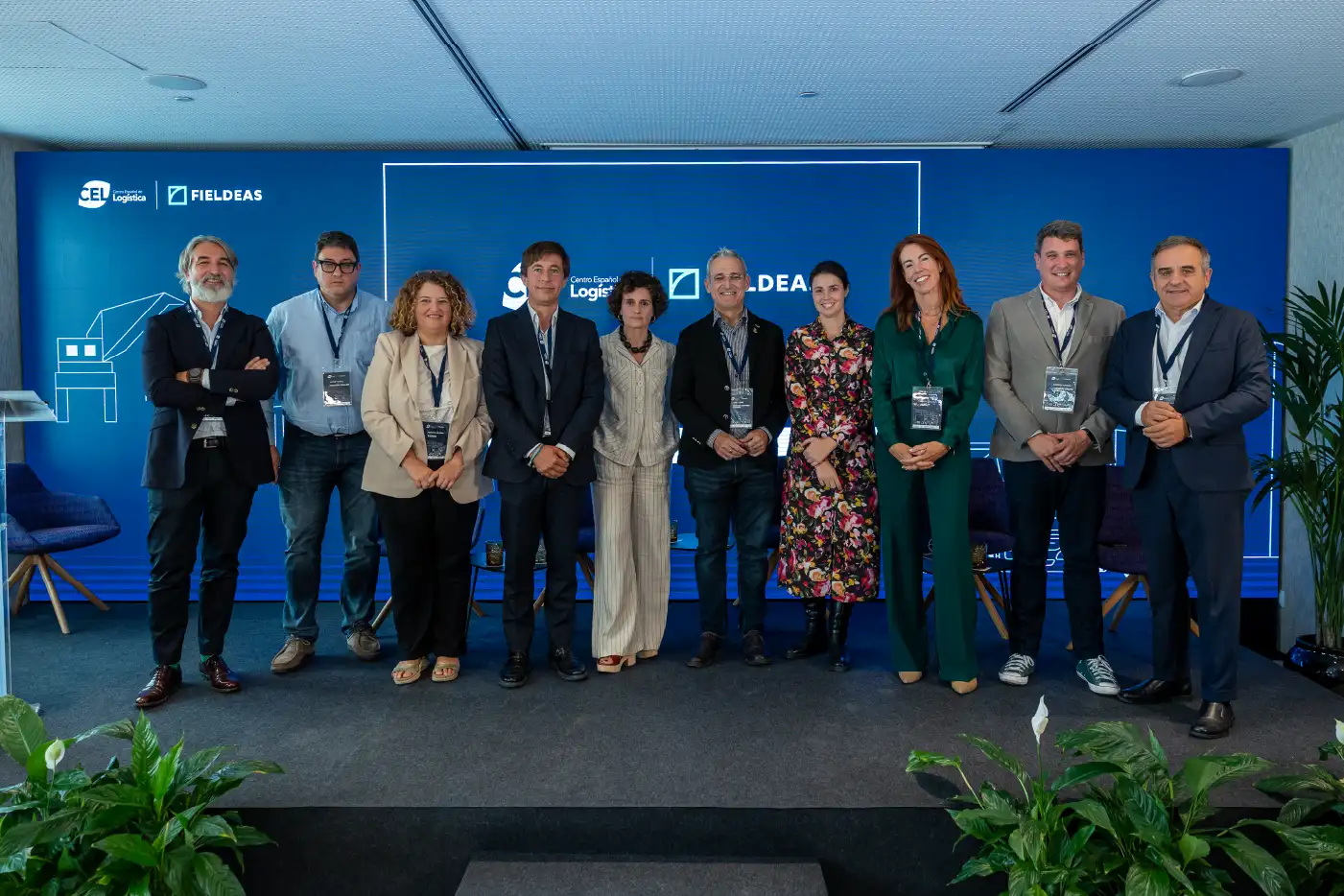
With the intention of analyzing where both actors stand after the entry into force of this regulation, disruptive in many aspects, FIELDEAS and the Spanish Logistics Center (CEL) have prepared the study “Dock Management in Spain three years after RDL 3/2022: degree of digitization and perspectives of shippers and carriers”.
We have already analyzed in previous posts the main conclusions and the content of the round table that was held during the presentation event of the aforementioned study.
In this post we will focus on the real impact of the regulation, at a time when both shippers and carriers have already been able to analyze and detect the lights and shadows of RDL 3/2022.
As the quantitative and qualitative analysis of the study shows, the impact of the entry into force of RDL 3/2022 for loading companies is neutral.
Specifically, 60.47% of the loader companies report a neutral impact, while 32.56% consider it to be positive and 6.98% negative.
These data show that, despite what was believed at the time of the announcement of the regulation, it has not had a significant negative effect on the sector and that, on the contrary, it has improved some aspects, such as driver protection.
One of the most relevant aspects of the regulation is the prohibition of loading and unloading by drivers.
This measure was highly publicized and was a source of concern at the time. However, this aspect is being complied with and is not severely affecting the loading companies, as stated by 26.47%.
The results show both positive and negative impacts.
On the positive side, 22.06% indicate an improvement in relations with transporters, partially meeting the objective of balancing relations, although challenges remain. In addition, 8.82% perceive greater efficiency as warehouse operators are in charge of loading and unloading.
On the negative side, 25% recognize an increase in costs due to the need for more human resources and machinery, and 14.71% point to greater delays and difficulties since the entry into force of the ban on loading and unloading by the driver.


44.19% of the shippers have experienced a moderate increase in costs (between 1% and 5%). 27.91% have not noticed any impact, probably because drivers in their sector did not load and unload before the regulation.
On the other hand, 16.28% have registered a significant increase (between 5% and 15%) and 11.63% have registered an increase of more than 15%, generally in sectors where drivers used to take on these tasks and have now had to hire personnel, reorganize processes or invest in technology.
Although 51.16% of the loading companies state that the regulations have not significantly affected waiting times, 25.58% report increases: 11.63% between 0.1% and 5%, 9.30% between 5% and 10%, and 4.65% more than 10%.
On the other hand, 23.26% indicated reductions: 4.65% between 0.1% and 5%, 11.63% between 5% and 10%, and 6.98% above 10%.
These data reflect an uneven impact depending on the sector. In addition, almost 70% of shippers consider the one-hour waiting time limit to be insufficient, since in operations with large volumes or quality controls, processes can take two to three hours without implying mismanagement.
Thus, we can point out that, in general, the regulations have not reduced waiting times and have generated new frictions and penalty costs, aggravated by the lack of clarity as to when the waiting time starts to count.
The regulation sought to balance the relationship between shippers and carriers and boost their collaboration.
However, 81.40% of shippers state that the relationship has not changed after Royal Decree Law 3/2022, while only 18.60% perceive an improvement.
This indicates that the previous dynamics remain in place and that, although there are cases of increased coordination, they are not directly attributed to the law. Collaboration with carriers remains one of the main challenges and sources of tension for shippers.
The impact of RDL 3/2022 on transport companies is mostly perceived as neutral (48.72%), while 46.15% value it positively.
These data show that the regulation has not been disruptive, although it has helped to improve the stability of the road freight sector.
Only 5.13% perceive a negative impact, which reflects its conciliatory nature and a good general adaptation, although without significant improvements for all.
The regulation sought to improve the sustainability of road transport by focusing its impact on drivers’ working conditions, an objective that, according to transport companies, has been achieved.
Fifty percent (50%) highlighted labor improvement, 10.71% improved efficiency and 5.36% better relations with shippers.
On the other hand, 14.29% perceive no impact and another 14.29% report delays or difficulties, while 5.36% mention operational problems, penalties or unfair competition from carriers that are still unloading.
The general opinion is that the regulation has achieved its labor objective, but leaves pending issues such as defining the limits between stowage and unstowage or the beginning of the calculation of loading and unloading times.


Loading and unloading times continue to be a major concern for shippers.
The regulations set a maximum of one hour for these operations, after which the loading companies must pay compensation for stoppage.
However, the impact has been limited: 38.46% of the companies state that times have remained the same, while 35.90% report increases. On the other hand, 25.64% point to an improvement in times.
In conclusion, the impact has been uneven and depends on the sector.
Although the standard has acted as a catalyst for improvement, it does not guarantee uniform results and there is still a lack of clarity as to when the waiting period begins to count.
Likewise, while 51.28% of transport companies consider that the one-hour waiting time limit at docks is sufficient and realistic, 48.72% consider that it is not.
76.93% of transport companies do not perceive any improvement in their relations with shippers after the regulation, while only 23.08% do notice an improvement.
This reflects a stagnation in coordination and mutual understanding, indicating that the regulations, although well-intentioned, have not generated significant changes in this aspect.
Although the regulation does not generate main concern for shippers, they consider it necessary to adapt it to facilitate digitization in small companies and achieve a fairer, more flexible and professionalized management of loading and unloading processes.
For their part, transport companies consider that, although the regulation responds to historical demands of road transport, it must be adjusted to be effective. There is a demand for a more balanced regulation, adapted to the operational reality and that distributes responsibilities fairly.


31 Jul 2025
Intelligent docks programming: logistics management in real time

28 Aug 2025
Management by exception in the management of loading and unloading docks, is it feasible?
01 Oct 2025
Dock Management 2025 Study: 51.16% of shippers already have technological solutions in place

08 Oct 2025
One dock, two realities, one solution: dock digitization