Supply chain challenges and the key role of digitization
29 Oct 2025
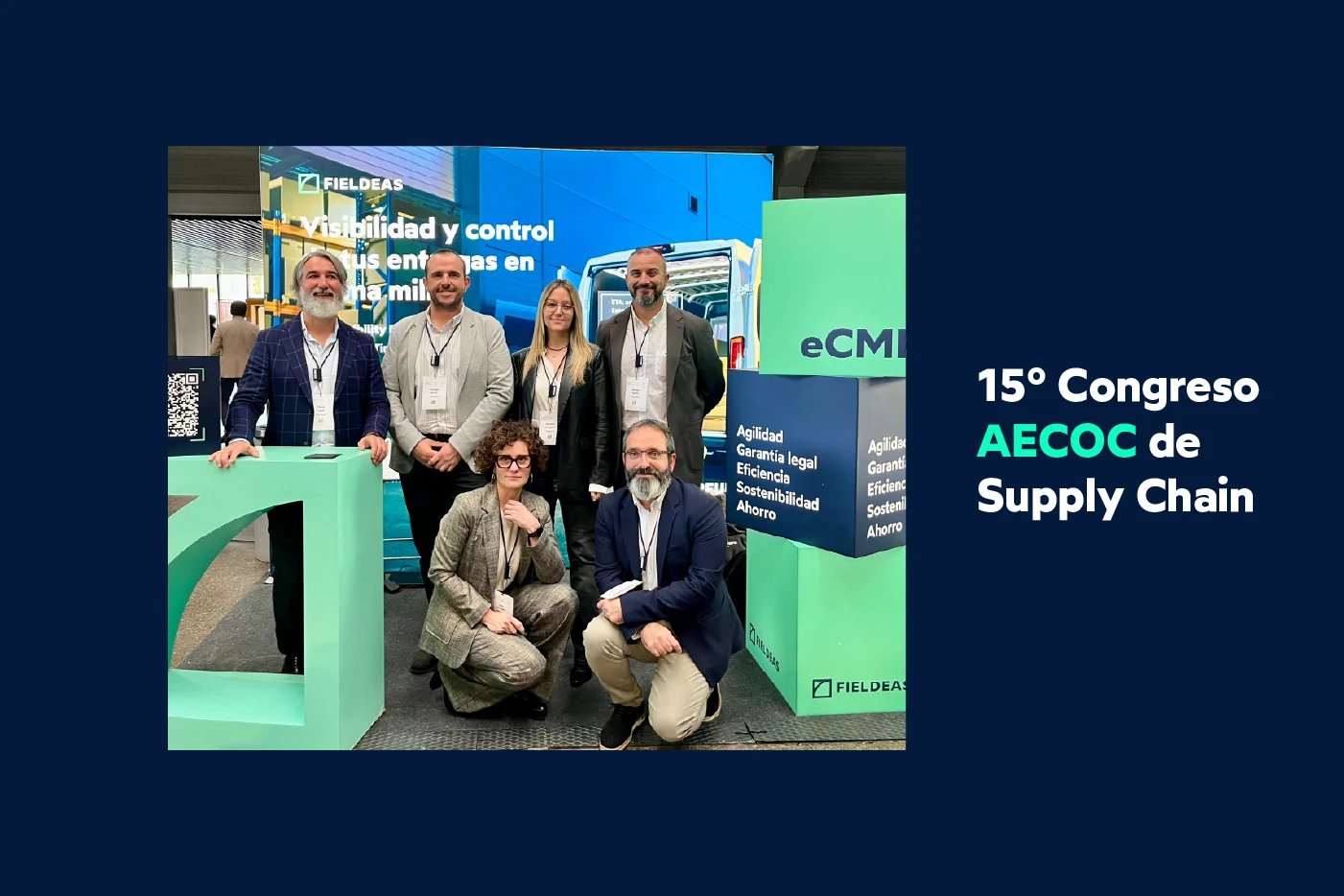


The 15th edition of the AECOC Supply Chain Congress brought to the table the main challenges facing the supply chain in an uncertain, volatile and highly competitive environment.
Under the theme “Reinventing the supply chain in the face of uncertainty”, the event served to confirm something that is already evident: only through digitization and collaboration can we build resilient, sustainable and future-proof supply chains.
At the opening of the congress, José María Bonmatí, director general of AECOC, emphasized the need to strengthen collaboration between all actors in the chain.
Geopolitical uncertainty, rising logistics costs and talent shortages are reshaping the way companies operate.
Economist Judith Arnal discussed how the new geoeconomic order, marked by protectionism and regulatory changes, is affecting global value chains.
His message was clear: agility and supplier diversification, combined with regulatory simplification and digitization of global visibility, are essential elements to remain competitive in this changing context.
The study “Perspectives for logistics in the FMCG sector” prepared by AECOC and presented during the congress provided a complete picture of the current state of the FMCG supply chain.
Despite the challenging environment, there is some optimism: volume is recovering and companies remain committed to sustainability and operational efficiency.
However, service levels suffer and difficulties in finding transportation or attracting talent are compounded.
Strategic priorities include the profitability of operations (73%), the application of new technologies (54%) and the implementation of sustainable measures (53%). And this is precisely where digitalization becomes the driving force behind the transformation.
One of the most repeated messages throughout the congress was that technology is not an option, but a strategic necessity.
FMCG companies are increasing their technology investment: 41% claim to have increased their digital spending by more than 5%, and 30% already apply generative artificial intelligence in their supply chain, especially for demand planning, process automation and route optimization.
Thus, demand forecasting tools, digital twins, warehouse automation and cybersecurity are some of the areas where investment effort is being concentrated.
These solutions make it possible to anticipate demand, reduce costs and gain efficiency, three essential levers for meeting today’s supply chain challenges.
In other words, forecasting demand and stock is optimizing the supply chain at its root. It means moving from reacting to changes to anticipating them, aligning commercial strategy with logistics operations and enhancing the resilience of the value chain.
Also, at this point, visibility becomes a critical factor. Solutions such as FIELDEAS Track and Trace capable of providing full real-time visibility of the movement of goods, are essential to improve traceability, coordination and responsiveness to any disruption.


On the other hand, if anything was clear at the 15th AECOC Supply Chain Congress, it is that collaboration remains the key.
There is no effective digitization without a shared flow of information between manufacturers, carriers, operators and customers.
End-to-end visibility can only be achieved if all links work on common indicators, exchanging data in real time and relying on collaborative digital platforms, such as FIELDEAS Track and Trace.
The panel discussion on trends in FMCG logistics reinforced this message. The speakers agreed that innovation should be part of the company’s DNA and that information should flow between departments, not just between companies.
In a context of continuous disruptions, such as the DANA in Valencia or the blackout in Spain, having a connected supply chain is the only way to ensure operational continuity.
Another major supply chain challenge highlighted at the congress was sustainability.
Although 72% of companies already have tools in place to monitor their carbon footprint, there is still some way to go, as only 55% have fully integrated sustainability objectives into their logistics and transportation, meaning that 45% still need to address this issue.
In this regard, technology is once again the great enabler. From route optimization and freight consolidation to the implementation of sustainable vehicles or the use of analytical platforms to calculate scope 3 emissions, digitization is transforming the way companies address their environmental impact.
However, the key, once again, is to balance sustainability and profitability.
One of the clearest messages from the event is that while automation advances, people remain at the heart of the supply chain.
The study presented by AECOC warns of the increase in absenteeism and the growing difficulty in attracting and retaining talent.
In this sense, digitalization can also help, through virtual training tools, more flexible planning systems or collaborative environments that improve the work environment and productivity.
In summary, the 15th AECOC Supply Chain Congress made it clear that today’s supply chain challenges, from geopolitical uncertainty to talent shortages, cannot be addressed with the tools of the past. The answer lies in a structural transformation based on three axes: technology, collaboration and sustainability.
In short, digitalization is the basis on which the supply chain of the future is being redefined.




12 Aug 2025
FIELDEAS: Multi-sector technological solutions with 100% Spanish capital. Local design, global impact
01 Oct 2025
Dock Management 2025 Study: 51.16% of shippers already have technological solutions in place
16 Oct 2025
What do shippers and carriers think of RDL 3/2022?
23 Oct 2025
Digitization challenges in dock management according to shippers and carriers