The different growth areas of the Internet of Things
One of the most visible trends of the near future
26 Dec 2017 Fuente: Gartner



There has been a lot of talk lately about the Internet of Things (IoT), one of the most visible trends of the near future. Advances in the latest technologies and networks, especially in the development of 5G, will enable the ultimate takeoff of millions of connected devices.
The year 2020 will be the year of the Internet of Things. A date that many technology consultancies point to as the date when the real explosion of IoT and connectivity will take place. The forecasts for that time are overwhelming, just to offer some data:
As for Gartner, it has pointed out some growth areas, which we list below.
The real birth of the Internet of Things will take place alongside the deployment of 5G networks. A network designed to uniquely support a network of small, interconnected devices, and which Gartner believes will enable the following IoT growth areas to take off:
In the area of security, the issue of crime is being addressed, which could increase with the presence of a greater number of connected devices. The most significant risks are centered on the identity theft on devices (currently there have been cases of impersonation using face scanners to access smartphones); or attacks known as “spoofing” or “spoofing” attacks. denial-of-sleep (denial-of-sleep)The device can be put into sleep mode to prevent the battery from discharging sooner.
Inherent in the deployment of the Internet of Things is the increase that will occur in devices that send and receive data and that, for the most part, are directly related to real-time decision making. This will also increase the relationship between analytics tool providers, cloud service providers or system integrators with the customer, increasingly adapting their services to the customer’s needs.
In turn, the management of all the interconnected devices becomes more complex and segmented, due to the geographical scope. On the one hand, the creation of short-range networks that consume little battery power in the devices is being carried out by optimizing the range and coverage of the networks between the devices connected to them. While this does not meet the demands of IoT, as current networks are not prepared to cope with an ecosystem of hundreds of connected and geographically dispersed devices.
This is why the deployment of wide-area, low-power networks is so important. This means that the emergence of 5G networks becomes a challenge.
In the processor area, hardware developers have the role of creating devices designed for global and broad connectivity. To this end, processor or system-on-chip designs will become smaller and smaller, with improvements in connectivity and low power consumption. A major advance in this area is the deployment of Single Board Computer systems. Single Board Computer systems such as Raspberry Pi.
It will also be necessary to develop operating systems for these devices, as the ones that currently exist are not the best scenario for IoT. In other words, modular operating systems will be required, subtle and designed to be part of a very broad structure, working autonomously.
With so many connected devices, the volume of data will be increasing, creating the need for systems that extract data quickly and enable real-time analysis.
A few years ago, the so-called Distributed Stream Computing PlatformsThese have regained prominence now with the importance of data transmission and extraction processes or results in streaming(which aim to accelerate this extraction to the maximum and become one of the fundamental elements of the IoT).
It is expected that in the area of platforms, even greater progress will be made through the development, by companies and professionals, of a package that includes everything necessary for customers to have an infrastructure made up of devices connected to their services. This would encompass the development of three new areas: the integral management of the devices, together with systems for managing the information generated by the infrastructure and the development of the software tools needed to work with the data.
Finally, the emergence of new standards will, at the same time, give rise to new ecosystems and, with them, new needs will arise based on the development of these media. An example is the APIswhich will be essential to facilitate the joining of many developers interested in the Internet of Things and interoperability. This is because adequate means will be needed for any device to be able to talk on any network, with any other device, in an efficient manner.
As the years go by, we face new challenges and paradigms within the ICT sector. However, they are also opportunities that force us to face totally innovative situations. In this case, to a world in which the ability to analyze data in real time, automatically and, to a greater extent, monitored, will prevail.
While in the Internet of Things, there are still many areas of growth to be discovered.

Marketing Manager at FIELDEAS


24 Feb 2026
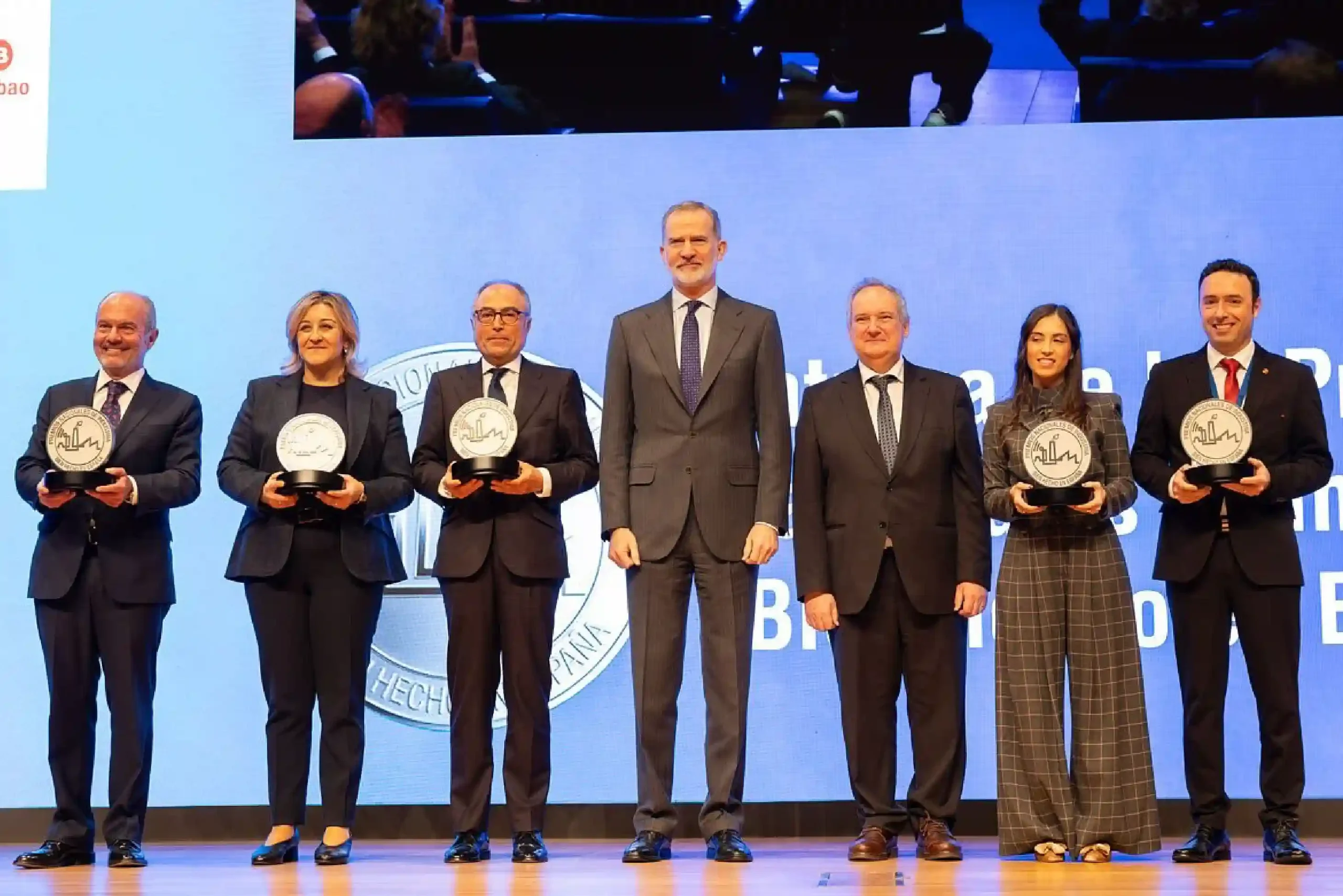
Moeve Chemicals’ Track and Trace project wins the National Industry Award “Well done in Spain”
The VIII National Congress of Industry has awarded the National Industry Award “Well Made in Spain” to the Track and Trace Project of Moeve Chemicals in the category of Environmental,…

19 Feb 2026
New era of the road: digitalization of transport documents in the Sustainable Mobility Act and the eFTI Regulation
The digitalization of road freight transport documents is a reality that can no longer be denied. The final approval of the Sustainable Mobility Law and its entry into force in…

12 Feb 2026
The 6 essential data of the road freight transport control document
The road transport control document data is the key point of the digitalization required by the Sustainable Mobility Act. This means that beyond the format and the design or title…

05 Feb 2026
In-transit verification of the Digital Control Document for road transport; what should be taken into account?
The Digital Control Document for road transport represents a breakthrough in terms of efficiency, traceability and security. However, it also generates doubts and concerns, especially due to the fear of…