Internationalization in transportation companies
Technology and digitization of processes as strong points in internationalization
25 Jan 2018
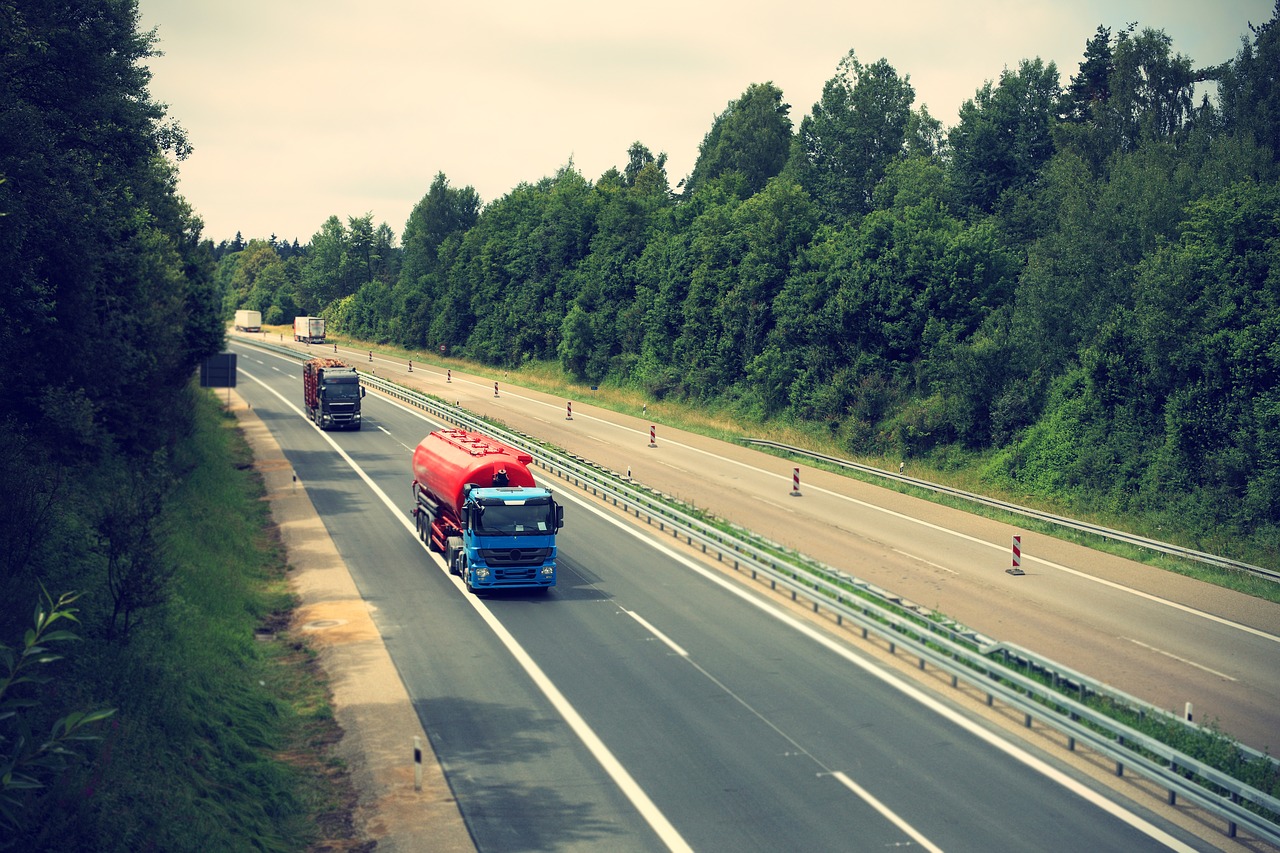


Today’s increasingly globalized and interdependent world economy depends more than ever on the transport of goods for the success of international trade. So much so that the internationalization of transport companies has become a necessity, as the figures show: imports of goods and services in Spain now account for one third of GDP, an increase of 10% compared to ten years ago .
The digital transformation of the economy has completely revolutionized the market, allowing us to purchase products from anywhere in the world just a click away. There are no longer physical barriers to acquiring the item we want.
In addition to the above, we must add the crisis experienced by Spanish companies, which has often forced them to pack their bags and explore abroad.
Two clear reasons why the freight forwarding industry needs to address the challenges related to its entry into international trade as soon as possible.
The greater the distances, the greater the number of intermediaries, suppliers, and gears that will complicate traceability, increasing the likelihood of problems. But it also increases the resolution time, since a failure in a nearby truck is not the same as a failure in one that is thousands of kilometers away.
Particularly those countries with more restrictive regulations (China, Russia…) will require more training of personnel (regulations and technical vocabulary vary from country to country), as well as reshape the supply chain itselfThe different taxes and tariffs may force the company to change sourcing locations for efficiency, and even push transport companies to work only in those countries that present fewer bureaucratic problems.
Poor traceability can mean the loss of several days and increased travel times. Likewise, a poor sales or needs forecast in the international arena will lead to greater difficulties in restocking. That is why process optimization is fundamental, becoming one of the greatest challenges in international freight forwarding. We are talking about locating the most convenient routes, reducing downtime, selecting the best suppliers or exploring all multimodal options.
Digital transformation has made technology the main protagonist of this scenario. It is not surprising that many transport companies have made a commitment to technology and the digitalization of their processes. This includes the implementation of enterprise mobility software to providethe best traceability solutions for shipments with ever-shortening delivery times.
Although sourcing costs may be lower abroad, it will be of little use if national quality standards are not maintained. We must remember that taking the leap to internationalization can end in failure if it is at the cost of a worsening of service.
There are many challenges that the freight forwarding sector must face on its path towards internationalization, a path that is often imposed by the market itself and not by the desire for expansion.
The magnitude and complexity of the challenge is considerable, although the characteristics of international trade offer multiple business opportunities that must not be missed.
To benefit from all of them, it is essential to manage, monitor and measure the entire business process in the field without losing visibility at any time. Understanding analytics as a priority in the internationalization of these companies. Through it, we can optimize routes, increase the number of trips in less time and costs, or speed up decision making; achieving the success of the processes in international trade.

Marketing Manager at FIELDEAS



24 Feb 2026
Moeve Chemicals’ Track and Trace project wins the National Industry Award “Well done in Spain”
The VIII National Congress of Industry has awarded the National Industry Award “Well Made in Spain” to the Track and Trace Project of Moeve Chemicals in the category of Environmental,…
19 Feb 2026
New era of the road: digitalization of transport documents in the Sustainable Mobility Act and the eFTI Regulation
The digitalization of road freight transport documents is a reality that can no longer be denied. The final approval of the Sustainable Mobility Law and its entry into force in…
12 Feb 2026
The 6 essential data of the road freight transport control document
The road transport control document data is the key point of the digitalization required by the Sustainable Mobility Act. This means that beyond the format and the design or title…
05 Feb 2026
In-transit verification of the Digital Control Document for road transport; what should be taken into account?
The Digital Control Document for road transport represents a breakthrough in terms of efficiency, traceability and security. However, it also generates doubts and concerns, especially due to the fear of…