New era of the road: digitalization of transport documents in the Sustainable Mobility Act and the eFTI Regulation
19 Feb 2026
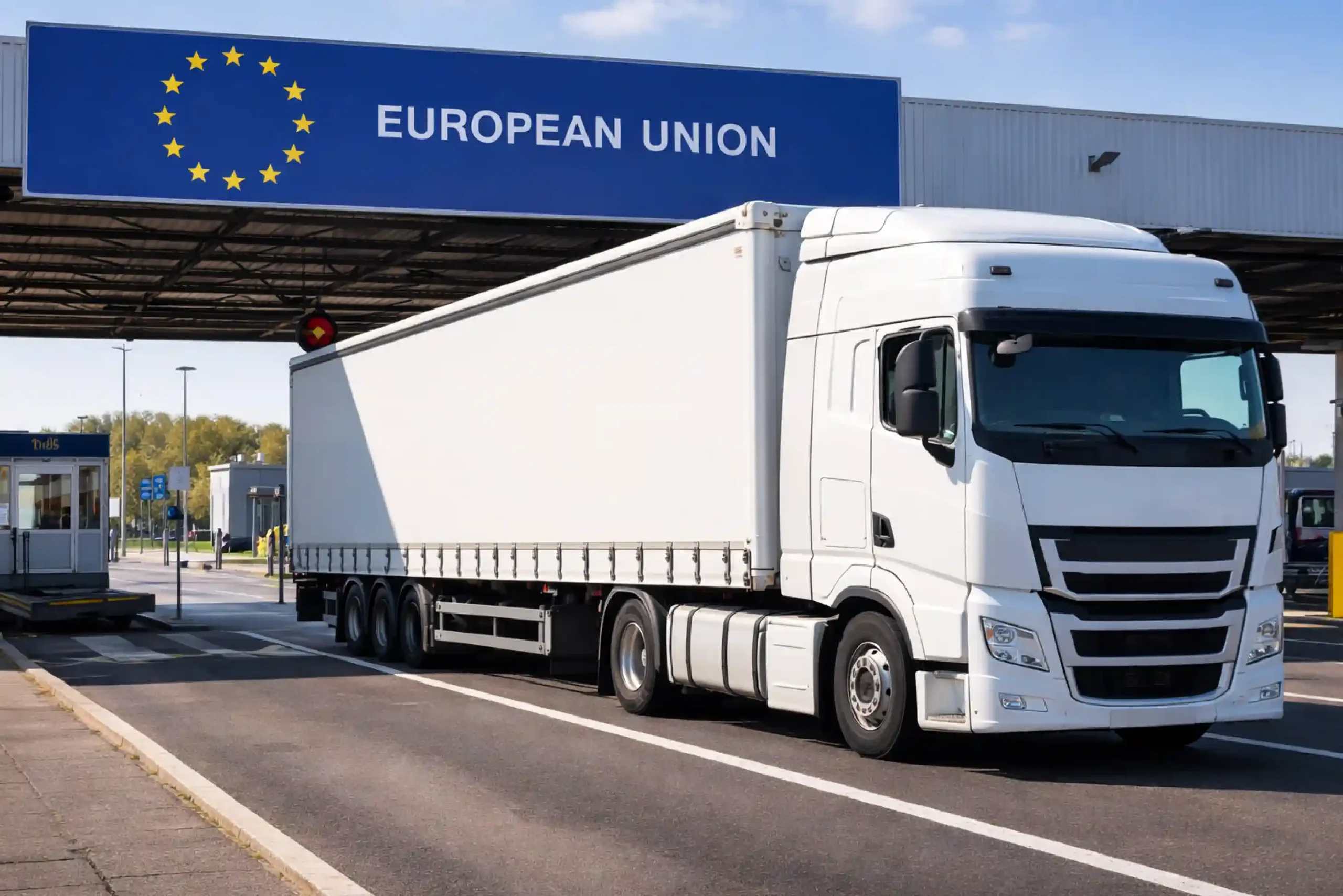


The digitalization of road freight transport documents is a reality that can no longer be denied.
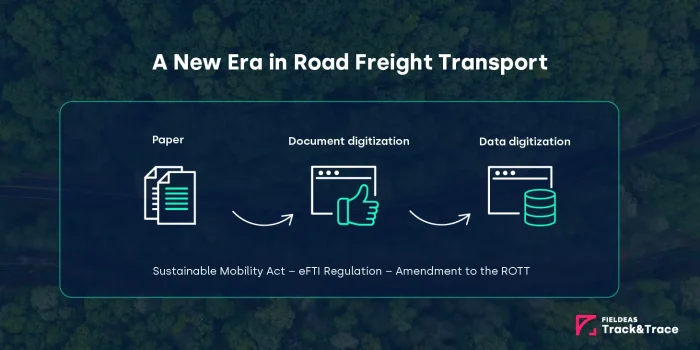
The final approval of the Sustainable Mobility Law and its entry into force in December 2025 has meant the entry of the road sector into a new era; that of document digitalization.
But we are not only talking about digitizing documents, but also about the digitization of information and transport data.
For this reason, beyond addressing the most immediate requirements, it is important to adopt a medium-term vision in order to be able to face the digital transformation that can no longer be avoided.
The first regulation that requires the digitalization of a transport document in Spain is the Sustainable Mobility Law. Specifically, it is the Control Document, which has an administrative nature and is the one that must be presented in the control processes, and must acquire digital format from October 2026.
Read the post In-transit verification of the Digital Control Document for road transport; what to take into account?
Although this regulation serves as a precedent, it is not the most disruptive. The Draft Royal Decree that will modify the ROTT and the eFTI Regulation, both with different application (national and European respectively), but with the same objective: to digitize transport data, going beyond the digitization of transport documents.
The eFTI (Electronic Freight Transport) Regulation is Regulation (EU) 2020/1056, concerning electronic freight transport information.
It was adopted by the European Parliament and the Council of the European Union with the aim of establishing a common legal framework for the acceptance of transport information in electronic format by the competent authorities of the Member States.
The Regulation is part of the European policy of digitization of transport and creates a harmonized system for the transmission and provision of data required by EU regulations.
Its main objective is to enable a secure and interconnected environment for the exchange of electronic transport information between companies and administrations (B2A).
The model envisaged in the Regulation is built around three legally defined elements: harmonized datasets, certified eFTI platforms and national access points (eFTI Gates).
The European Commission adopts implementing acts specifying:
These data sets are based exclusively on reporting obligations already existing in EU legislation.
The Regulation does not create new material information obligations; it harmonizes its format and the way it is made available electronically.
Electronic information should be hosted and made available through eFTI platforms.
These platforms must:
Only certified platforms can operate under the eFTI framework.
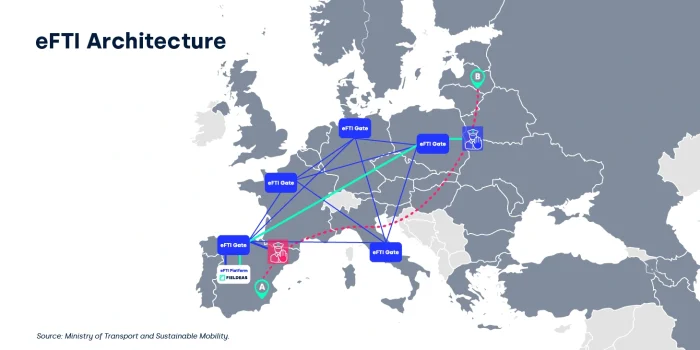
Each Member State must establish an eFTI access point, operationally known as an eFTI Gate.
Its function is to enable the competent authorities:
The national access point does not replace private platforms, but acts as an interface between the authorities and the ecosystem of certified platforms.
In other words, it ensures interoperability between countries and the harmonization of data exchanged electronically.
In Spain, the eFTI Gate will be the SIMPLE platform.
In July 2027 it will be mandatory for competent authorities to accept electronic information, but optional for companies.
As of that date:
The year 2027 is therefore the legal milestone for the full applicability of the system.
An assessment will be made in 2029 to determine whether to also make it mandatory for companies to submit data electronically within the eFTI framework.
With the aim of extending the impact of the Sustainable Mobility Law beyond the digitization of the control document, the Ministry of Transport and Sustainable Mobility has launched a draft Royal Decree that intends to address the digitization of transport data on a mandatory basis.
In other words, the exchange of PDF documents would be replaced by the exchange and communication of electronic data.
This Royal Decree would amend the ROTT and is subject to the development of the eFTI, which means that it will be adjusted to the deadlines of the eFTI when it is fully operational.
In this new era of the road, FIELDEAS Track and Trace presents itself as a reliable partner for the digitization of transport data with its Smart Docs Hub document digitization module.
The main pillars of this solution are:

Marketing Manager at FIELDEAS



10 Dec 2025
Road document digitization: from the transport control document to the eCMR

15 Jan 2026
How does the digitalization of the control document affect drivers?

05 Feb 2026
In-transit verification of the Digital Control Document for road transport; what should be taken into account?

12 Feb 2026
The 6 essential data of the road freight transport control document