Logistics and supply chain digitalization
15 Jul 2021



The Recovery Plan drawn up by the Government and sent to Brussels gives a leading role to connected and smart mobility.
Specifically, the Ministry of Transport, Mobility and Urban Agenda estimates that more than 6.6 billion euros will be allocated for safe, sustainable and connected mobility.
Likewise, in this area, according to the figures provided by the central government, part of the planned investments will be used to promote the digitalization of transport and logistics.
Specifically, 47.5 million euros have been earmarked for this item, which will be complemented by transfers of a further 220 million euros to the autonomous communities to co-finance digitization projects.
These aids for the digitalization of transport companies aim to break down the entry barriers to the digitalization of the sector, improving its competitiveness and efficiency, as well as service.
In more detail, it is contemplated to move forward in the mandatory use of digital documentation and in the dissemination of the SIMPLE Project.The project is an ambitious initiative to establish a single administrative window through an open and collaborative technological platform that will serve as a homogeneous telematic tool to ensure interoperability between the different modes of transport.
This will be done through the electronic exchange of information that will allow the integrated management of all data and documents in the multimodal logistics chain, as well as the traceability of goods in the different means of transport.
In this way, the Executive placesdigitalization as the greatest challenge for the logistics and transport sector, along with sustainability.

In this same sense, it is a commonly accepted opinion that this decade will be the decade of the definitive impulse to the transformation towards a connected, intelligent and sustainable mobility, in its double economic and environmental aspect.
The boom in e-commerce plays a decisive role in these advances, as well as the changes that are taking place in consumer habits, which are forcing the company to innovating in supply chain management to adapt it to the new needs of consumers, which, in a very basic way, can be summed up in the fact that the customer wants his product immediately and through any channel, whether physical or online.
With e-commerce already accounting for a share of all global retail sales of around 20%, according to UNCTAD, years of strong momentum are expected, at least until 2025, and will push for changes in logistics management.
In an increasingly technological scenario, the supply chain is moving towards an unstoppable digital transformation that will allow it to adapt to the new reality and, at the same time, boost competitiveness and efficiency.
The digitization process offers a series of benefits that take advantage of the increasingly universal accessibility of new technologies, which can be summarized as follows:

Within the supply chain, some technologies have more specific applications than others. For example:
FIELDEAS has succeeded in developing a moldable supply chain visibility tool with unique adaptability capabilities in the market.
Thanks to continuous improvement processes and direct contact with some of the main players in the logistics sector, FIELDEAS Track and Trace has become a tool capable of acting as a control tower with end-to-end visibility of end-to-end supply chains, easily adapting to any need.


Marketing Manager at FIELDEAS



05 Feb 2026
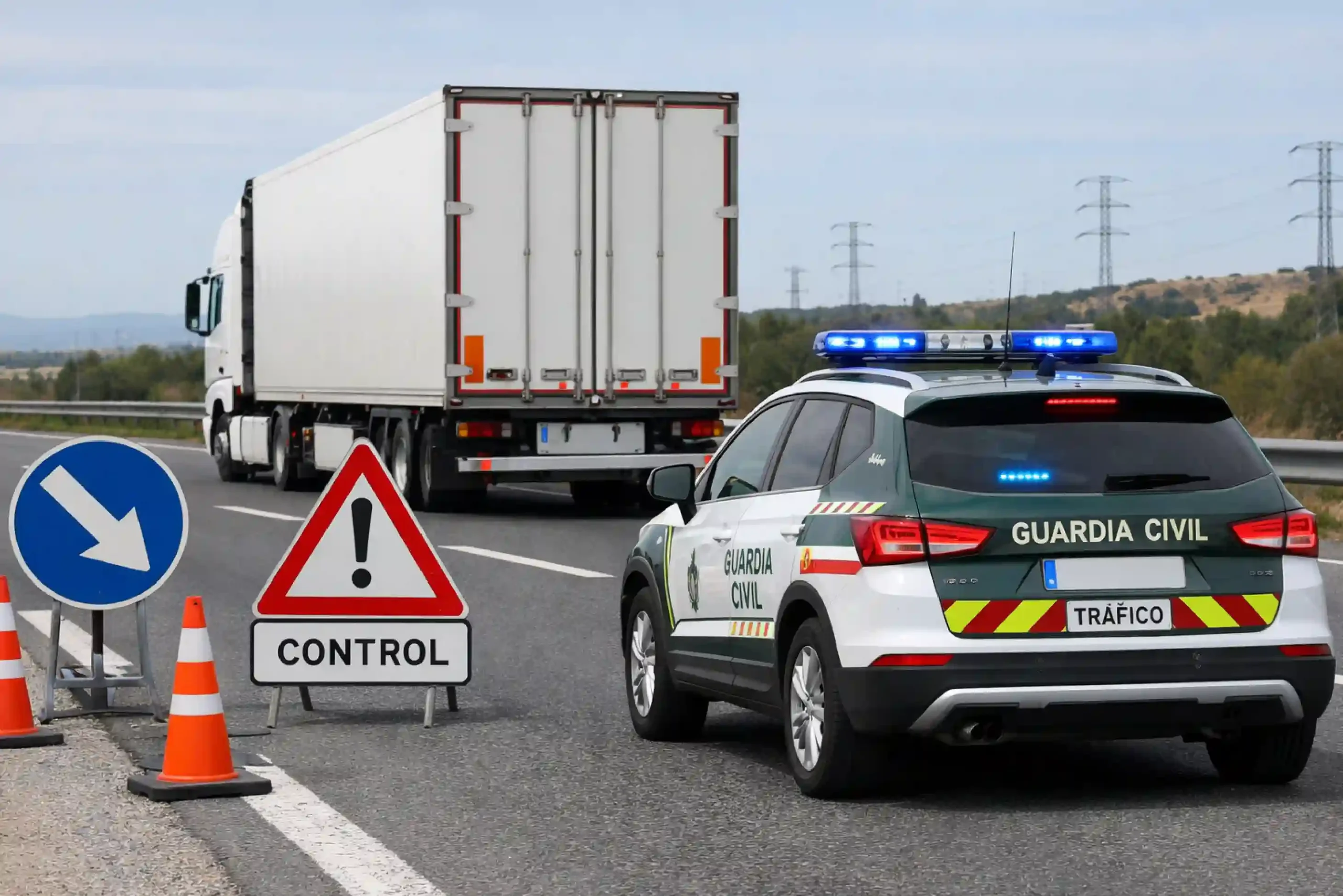
In-transit verification of the Digital Control Document for road transport; what should be taken into account?
The Digital Control Document for road transport represents a breakthrough in terms of efficiency, traceability and security. However, it also generates doubts and concerns, especially due to the fear of…
29 Jan 2026
Frequently asked questions (FAQs) on road transport documents
Numerous road transport documents are used in day-to-day road freight transport: control document, consignment note, CMR, delivery note, stowage form, waybill… All of road transport documents are relevant, but not…

23 Jan 2026
No-code electronic form: efficiency for companies with field operations
For companies operating in the field, achieving high levels of efficiency and competitiveness is an additional challenge, as digitizing processes becomes even more relevant. In this scenario, the electronic form…

22 Jan 2026
Comprehensive digitization of road transport documents: mandatory vs. strategy
The management of road transport documents is going through a key moment. The arrival of the mandatory digitization of the Control Document in October 2026 opens the door to the…