Industry 4.0 leading the future
Industry 4.0 as a powerful tool to optimize production systems through efficient digitization and continuous data analysis.
08 Mar 2018



After the industrial revolution, the development of electricity and industrial automation, we are now at the gates of what would be the fourth industrial revolution, a concept known as Industry 4.0.
It is a term that emerged in 2012 in Germany as part of a project to renew industry based on process automation and interconnection of equipment, systems, assets and people.
Beyond scientific advances and technology, it is industry and engineering that, once again, are going to dynamize the modes of production and consumption, transforming the entire structure of the relationships between devices and with the human factor.
We start with real-time data analysis, which makes the decision-making system much more robust and reliable. This decision-making process is also decentralized , with cyber-physical systems choosing the most appropriate action.
On the other hand, computer virtualization is put to the service of operational failure prediction, which increases overall efficiency and maintenance management.
1) The Internet of Thingsis defined as the network of connection between equipment, vehicles and various machinery through electronic devices that will facilitate the interaction between them and the constant collection and exchange of data.
2) Data analysis big data based on Computer Aided Engineering (CAE), which allows us to optimize production processes, minimizing errors. Operators have, in this sense, a great tool to simulate operations and set up highly adjusted configurations adapted to each particular case.
3) Information as a foundation for development requires the sharing of data far beyond the borders of each company’s servers, so the cloud is a nerve center where a diverse and productive exchange is forged.
4) Integral participation systems aim to include not only equipment, systems and operators, but also customers during all stages of production. This will create an enrichment of the production experience, allowing us to be more mobile in the business mobility that will unite value chains.
5) Simulation will be important in an ecosystem where we intend to predict and control every aspect of production. In fact, each operating unit will have a twin(digital twin) that will be its virtual representative and that will allow the necessary tests and trials to be carried out to achieve the ideal parameter programming and operating configuration.
6) Of course, if all systems are interconnected, cybersecurity will be a key element of business protection.
In short, Industry 4.0 will lead to a profound transformation in the way analytics systems are understood, turning the constant emission and collection of data across all layers into very powerful tools for production optimization.
The human factor is not eliminated, but rather its capacity to improve activities aimed at satisfying a customer, who is also an active part of the feedback needed to drive intelligent production, is multiplied.

Marketing Manager at FIELDEAS



05 Feb 2026
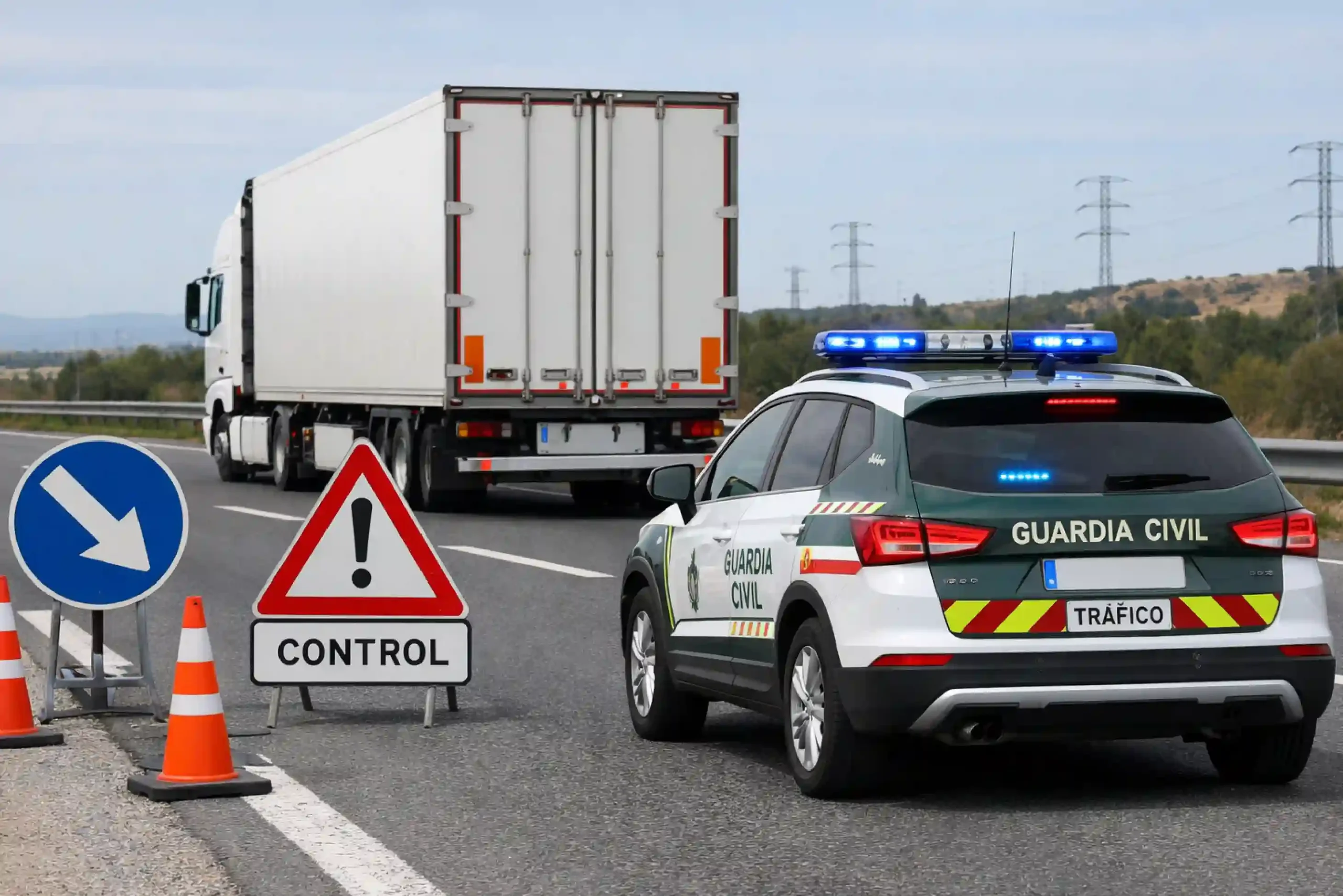
In-transit verification of the Digital Control Document for road transport; what should be taken into account?
The Digital Control Document for road transport represents a breakthrough in terms of efficiency, traceability and security. However, it also generates doubts and concerns, especially due to the fear of…
29 Jan 2026
Frequently asked questions (FAQs) on road transport documents
Numerous road transport documents are used in day-to-day road freight transport: control document, consignment note, CMR, delivery note, stowage form, waybill… All of road transport documents are relevant, but not…

23 Jan 2026
No-code electronic form: efficiency for companies with field operations
For companies operating in the field, achieving high levels of efficiency and competitiveness is an additional challenge, as digitizing processes becomes even more relevant. In this scenario, the electronic form…

22 Jan 2026
Comprehensive digitization of road transport documents: mandatory vs. strategy
The management of road transport documents is going through a key moment. The arrival of the mandatory digitization of the Control Document in October 2026 opens the door to the…