Supply chain visibility and risk management
19 Aug 2021


For a little over a year and a half, maritime flows between Asia and the main consumption centers of Europe and North America have been in a state of constant flux. This sharpens the need for full visibility into the supply chain.
The lack of empty containers and the congestion that exists in some of the main Chinese ports, such as Yantian, for example, mean real headaches for shipping lines, logistics operators and many companies that see how their supply lines escape their control.
Situations of this type are not uncommon in logistics management. They may even become more common as consumer habits change and supply chains tighten to meet the guaranteed delivery times demanded by increasingly established e-commerce.
In an increasingly demanding and fast-paced environment, it is essential to have tools to manage risks and incidents in order to have alternatives to avoid shortages and uncovered markets.
Returning to the difficulties experienced by international maritime flows, it can be said that, in a scenario of global affectation of flows between Asia and Europe, the companies that will best overcome this slump will be those that have managed to articulate different routes to overcome the situation.
In this way, large multinationals around the world are seeking to reduce, since it is not possible to fully mitigate the impact of such a serious situation, what is known as the supply chain whiplash effect.
This metaphor summarizes the effect of a slight movement of the wrist a few seconds later when the tip of a whip is cracked, multiplying the energy that is discharged, which, translated into logistics management, means that the stranding of a simple (albeit gigantic) ship will have an even greater impact elsewhere in the supply chain. in a timeframe that remains to be seen.
To try to reduce the whipping effect, companies that have suffered from this incident have had to have tools that have enabled them to know in detail what merchandise has been trapped, as well as their destinations and the need in the places they were going to, in order to establish an alternative work scheme.
Without adequate visibility, none of the affected companies would have been able to establish contingency plans to manage the situation in the best possible way in collaboration with logistics operators, carriers, shippers and shipping lines.
In short, proper risk management is not possible without tools for complete visibility of the chain.

Similarly, end-to-end chain visibility tools also enable supply chain diagnostics to detect critical moments and blind spots to which special attention should be paid.
This is especially true if the visibility tools have a business perspective, so that the diagnosis takes into account a greater number of factors and a complete view of the flow, making the diagnosis more accurate.
As a Deloitte report released last year points out, companies that have developed business continuity strategies through risk management systems will be better prepared to successfully cope with catastrophic events that could disrupt logistics flows.
To achieve this advanced management, these companies usually building strong relationships with suppliers and customers through collaboration The Deloitte study notes that the idea is to “provide visibility across the extended supply network to better understand their risks and drive targeted actions based on their priorities,” thereby achieving gain the agility needed to enhance its resilience to any eventuality and react proactively to threats in the chain.
In this same sense, the consulting firm also establishes some strategies to be followed to improve risk management in logistics activities, among which the following stand out:
FIELDEAS Track and Trace brings together best-in-class capabilities for end-to-end supply chain traceability with a global business vision.
In this way, it is possible to obtain an overview of the entire operation in order to make decisions from a platform that acts as a control tower to manage the logistics activity with agility.
All this in real time and with the potential for full traceability to the unit, to generate visual information from a wide variety of sources and complete the digital transformation in logistics and transportation activity.

Marketing Manager at FIELDEAS



05 Feb 2026
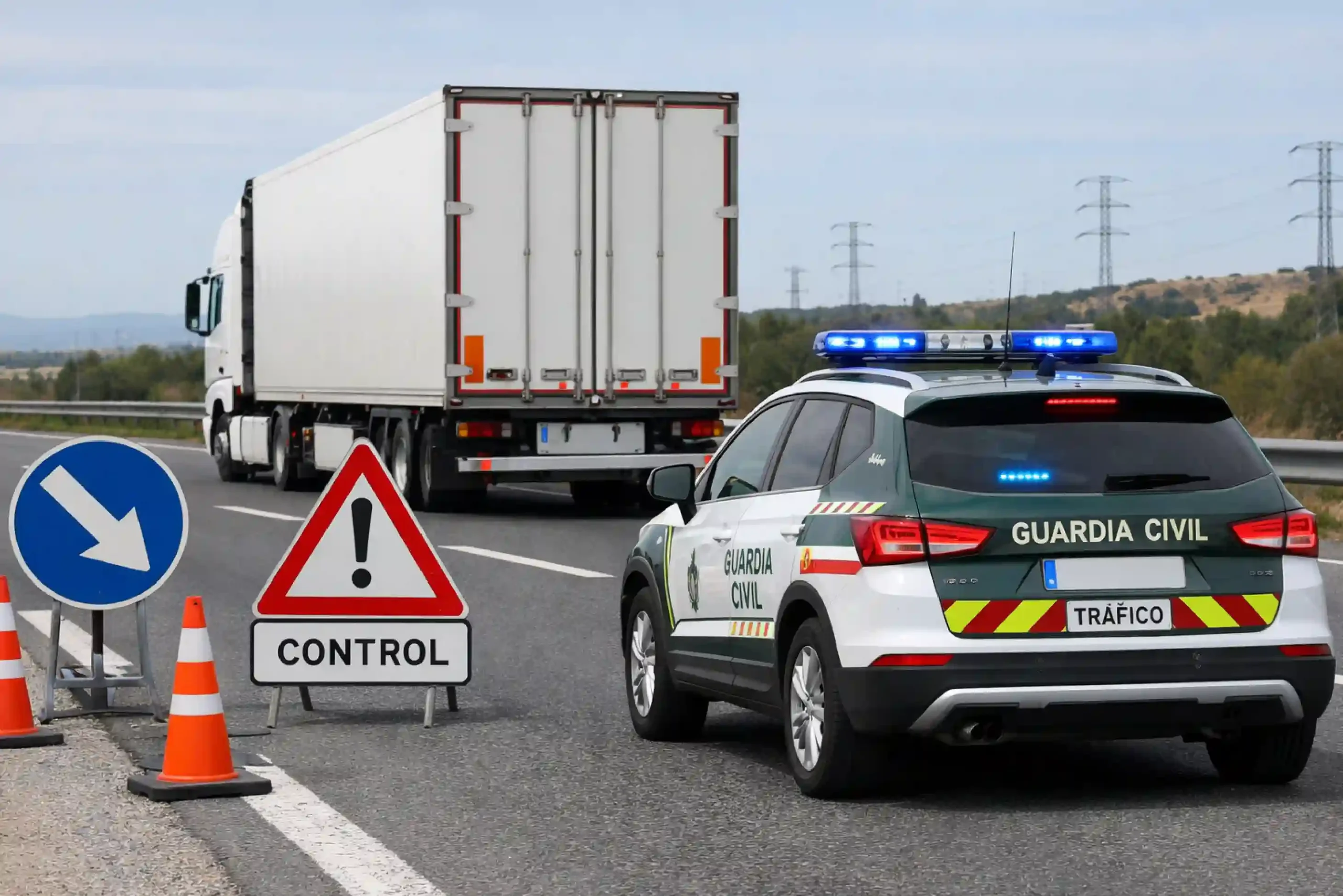
In-transit verification of the Digital Control Document for road transport; what should be taken into account?
The Digital Control Document for road transport represents a breakthrough in terms of efficiency, traceability and security. However, it also generates doubts and concerns, especially due to the fear of…
29 Jan 2026
Frequently asked questions (FAQs) on road transport documents
Numerous road transport documents are used in day-to-day road freight transport: control document, consignment note, CMR, delivery note, stowage form, waybill… All of road transport documents are relevant, but not…

23 Jan 2026
No-code electronic form: efficiency for companies with field operations
For companies operating in the field, achieving high levels of efficiency and competitiveness is an additional challenge, as digitizing processes becomes even more relevant. In this scenario, the electronic form…

22 Jan 2026
Comprehensive digitization of road transport documents: mandatory vs. strategy
The management of road transport documents is going through a key moment. The arrival of the mandatory digitization of the Control Document in October 2026 opens the door to the…