What is traceability and how to use it to compete as a giant?
02 Nov 2018



Now that products are more accessible in the marketplace than ever before and look more and more similar to each other, we are faced with the great challenge of competing from the supply chain. Giants such as Inditex, El Corte Inglés and Mercadona are already doing so. This is a firm and differential commitment to products through the efficiency provided by traceability.
We are all familiar with the definition of traceability as the management and control of business processes that allow us to know the history, location and trajectory of a product or batch of products along the supply chain at a given time, through specific tools.
But now the customer (both the end consumer and the intermediate links from the time a product is manufactured until it reaches a home) has managed to position itself at the center of the entire chain and all processes and the only way to reach him in a differential way and, therefore, providing value to your brand is a digital and transparent logistics.
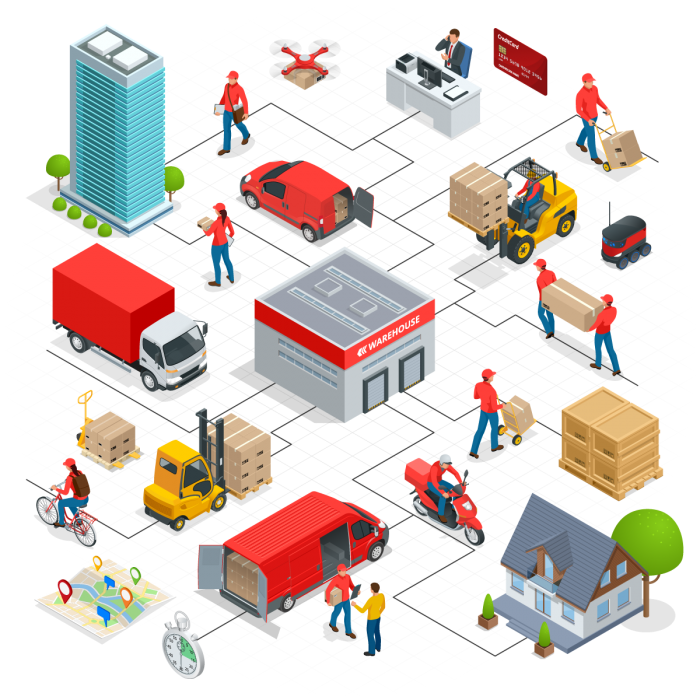
The transparency of the traceability chain, far from being a handicap that lays bare a company’s processes, can become its main differential value, both with the end customer and with intermediate customers.
We are talking about transparency and real-time connectivity as a culture, not as something specific in a product traceability operation (something that has perhaps been developed more in processes such as delivery or distribution). Digitalization has made e-commerce accessible. We are talking about concepts that only a couple of years ago seemed unattainable for SMEs and self-employed SMEs and the self-employed that make up more than 90% of our business fabric.
The expansion of new technologies within a company’s traceability processes is reducing their cost at a dizzying pace, so that they are now accessible to all companies. Competing through them will make a difference, because, in turn, connectivity and data analytics will make a difference data analytics open up a range of possibilities for development that is as broad as it is unexplored.
Traceability is a great collaboration tool forcustomers and suppliers. A constant source of information that, thanks to big data, does not die when it reaches the end customer, but in many cases continues to provide data and information during its use.
More and more elements of our daily life are connected, from the TV to the car, the watch or the fridge. Focus on data, analysis and follow-up to continue refining the product and experience improvement strategy.
Transparency as a concept is one of the most sought-after values of all times. Transparency understood as a tool for competitiveness, effectiveness, efficiency and collaboration.
Since the measurement of carbon footprint, up to tracking of a product on delivery, to The use of the system can be used to control the temperature of a drug or for efficient driving or geolocation and the management and optimization of routes in real time based on traffic jams, road works or accidents. But we can also apply traceability to the tracking of pallets or cages that do not return to the chain (they get lost along the way) and whose limbo represents an escape route in terms of competitiveness.
To talk about traceability is to talk about safety and control. The blockchain through coding, encryption and secure blockchains already applied to online banking, also represents the concept of transparency and traceability we were talking about. Now the challenge is not so much in the technological development itself. We have already achieved that. Moreover, the technology and connectivity itself is already developed and affordable for companies. The challenge now lies more in the vision of the business.
Why shouldn’t SMEs copy the strategies of the giants? Why not now that technology and connectivity are within everyone’s reach? It is no longer a question of concept, it is a question of business culture, of strategy, of believing in it and making a firm commitment to it. That is the key to startups that, without big budgets, revolutionize markets thanks to the use of the two tools we are talking about today: technology and connectivity. And of its use without complexes, just as the big players do, with a comprehensive vision of the entire supply chain and all its services.
Don’t miss our presentation at Logistics18 ” MAXIMUM TRACEABILITY, MINIMUM INTERACTION: Artificial Intelligence in Track&Trace” on November 13 in the Palibex room at 12:40 by our General Manager, Óscar López.


Marketing Manager at FIELDEAS


05 Feb 2026
In-transit verification of the Digital Control Document for road transport; what should be taken into account?
The Digital Control Document for road transport represents a breakthrough in terms of efficiency, traceability and security. However, it also generates doubts and concerns, especially due to the fear of…
29 Jan 2026
Frequently asked questions (FAQs) on road transport documents
Numerous road transport documents are used in day-to-day road freight transport: control document, consignment note, CMR, delivery note, stowage form, waybill… All of road transport documents are relevant, but not…
23 Jan 2026
No-code electronic form: efficiency for companies with field operations
For companies operating in the field, achieving high levels of efficiency and competitiveness is an additional challenge, as digitizing processes becomes even more relevant. In this scenario, the electronic form…
22 Jan 2026
Comprehensive digitization of road transport documents: mandatory vs. strategy
The management of road transport documents is going through a key moment. The arrival of the mandatory digitization of the Control Document in October 2026 opens the door to the…