Visibility in intermodal supply chains
18 Jan 2023
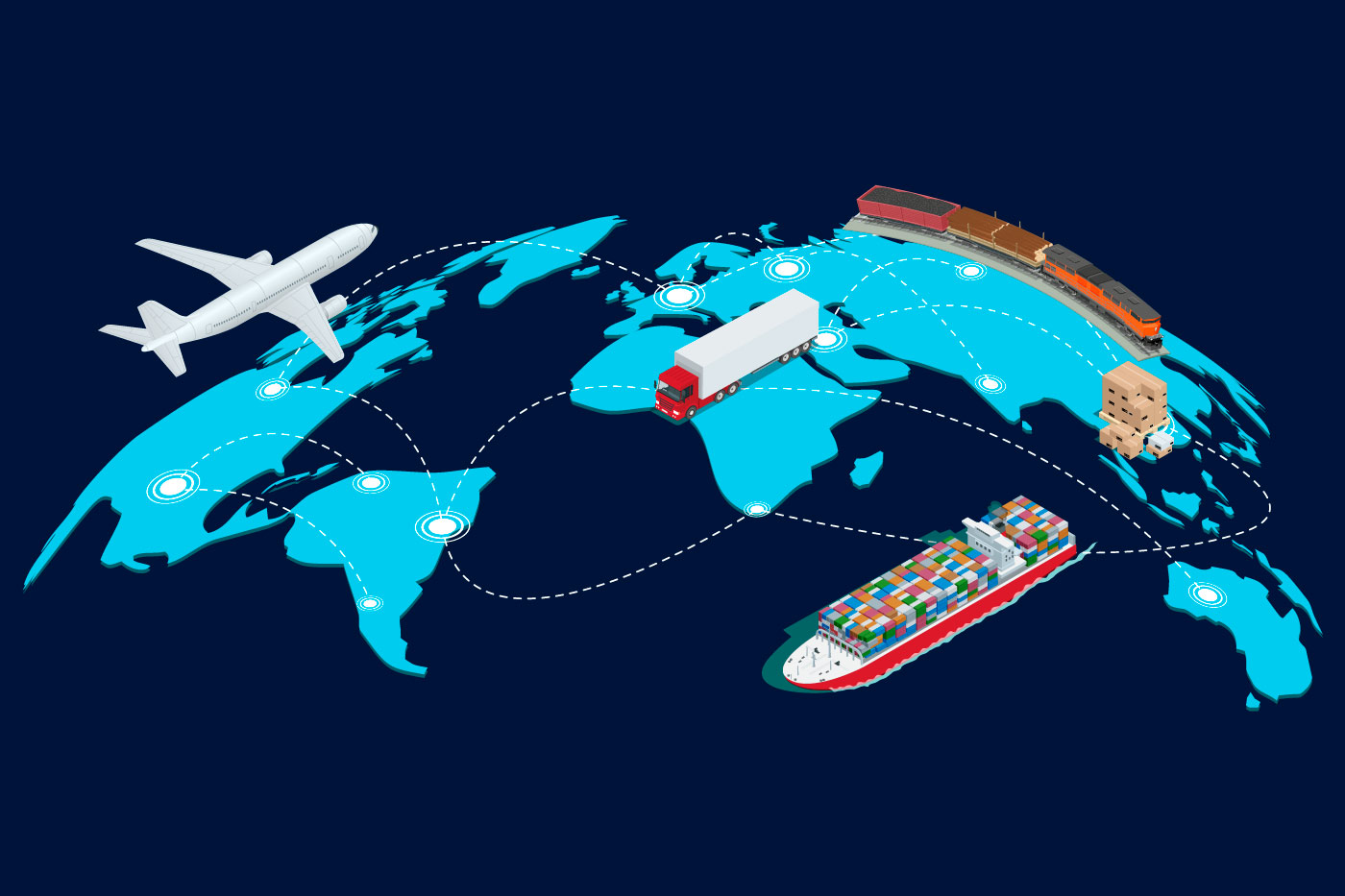


Visibility is a key factor in efficiently managing intermodal supply chains.
The use of various modes of transport for the movement of goods offers greater flexibility in terms of costs and, at the same time, also reduces the environmental impact of logistics management.
In Spain, according to the national freight transport, the latest Transport and Logistics Observatory prepared by the Ministry of Transport, Mobility and the Urban Agenda with data from 2020 points out that the road has a modal share of 96%, while maritime cabotage accounts for 3% and rail for 1%.
Likewise, in the case of international freight transport in our country, maritime transport is the hegemonic mode, with a share of 79.2%, while road transport accounts for 19.9% of the total tons transported and railroads for a residual 0.8%.
These records show that there is still a long way to go to achieve a more balanced and environmentally sustainable modal split.
In this regard, it should also be borne in mind that national and European policies have been placing special emphasis for many years now on promoting rail freight transport.
Similarly, a pay-per-use system is expected to be introduced on Spanish highways in the coming years, which will introduce a new cost for road freight companies and will help to balance what many experts consider to be external costs that are not currently paid.
In short, supply chains are becoming increasingly intermodal, since, in addition to price, an essential factor in their operation, other elements such as environmental sustainability and corporate social responsibility also come into play.
Intermodal supply chains use two or more modes of transportation to get goods from their point of origin to their final destination.
The most typical intermodal supply chains are those that use road transport, both at origin to move goods to port facilities and at destination to take them from the docks to their inland destinations, and maritime transport, generally for intercontinental movements.
However, the use of rail services is becoming more and more common, especially due to the lower environmental impact of this mode, as well as the increasingly important investments being made to facilitate rail-port intermodality.
The use of intermodal supply chains has some advantages, such as:
In this sense, intermodal supply chains have their application in long routes, with closed circuits and fixed periods.
In these cases, they provide greater safety, efficiency, cost reduction and minimization of pollutant emissions.
Along the same lines, the load capacity of intermodal supply chains provides benefits in terms of both logistics costs and energy efficiency.
In terms of reducing logistics costs, the ability of these supply chains to use the most efficient mode at any given moment makes it possible to adjust the service to minimize the cost of all transportation along the entire chain.
Similarly, the use of different modes also provides alternatives to avoid possible risks and the ability to overcome blockages.
On the other hand, the use of different modes of transport also makes it possible to improve the energy efficiency of the supply chain by selecting those alternatives that allow a transport service to be provided with the lowest energy consumption.
This results in savings in fuel consumption and, at the same time, a reduction of carbon emissions in logistics operations.
However, the wide variability of intermodal supply chains complicates the ability to track goods throughout the entire process, precisely in a context in which it is increasingly necessary to provide complete visibility without blind spots.
In intermodal chains, there are several transport steps, with the corresponding exchange of goods between modes.
Precisely these times are critical moments to ensure correct traceability of the cargo even in the most complex situations.
Visibility tools with intermodal transport tracking capabilities allow for proper management of the complexity of intermodal supply chains in order to reap the full benefits in terms of cost, efficiency and emissions reduction.
FIELDEAS Track and Trace is a visibility tool with features specially designed to manage intermodal supply chains.
Specifically, this software has specific developments that allow real-time monitoring of multimodal transport operations, making it the most flexible and advanced visibility tool on the market.
For this purpose, FIELDEAS Track and Trace integrates data collected in any way to channel it in real time into key information that provides complete supply chain visibility, with no blind spots, harnessing the full analytical power of specially developed algorithms to take full control of intermodal supply chains that put the customer at the center and operate in an agile, efficient and resilient manner by making decisions based on information obtained in real time.
FIELDEAS Track and Trace allows you to track goods in any mode, whether by road, sea, air freight and rail services.
The tool easily and accurately integrates all records generated in any mode for complete end-to-end visibility in even the most complex and long intermodal supply chains.
Contact us so we can show you how FIELDEAS Track and Trace can help you manage your supply chain visibility.

Marketing Manager at FIELDEAS



05 Feb 2026
In-transit verification of the Digital Control Document for road transport; what should be taken into account?
The Digital Control Document for road transport represents a breakthrough in terms of efficiency, traceability and security. However, it also generates doubts and concerns, especially due to the fear of…
29 Jan 2026
Frequently asked questions (FAQs) on road transport documents
Numerous road transport documents are used in day-to-day road freight transport: control document, consignment note, CMR, delivery note, stowage form, waybill… All of road transport documents are relevant, but not…

23 Jan 2026
No-code electronic form: efficiency for companies with field operations
For companies operating in the field, achieving high levels of efficiency and competitiveness is an additional challenge, as digitizing processes becomes even more relevant. In this scenario, the electronic form…

22 Jan 2026
Comprehensive digitization of road transport documents: mandatory vs. strategy
The management of road transport documents is going through a key moment. The arrival of the mandatory digitization of the Control Document in October 2026 opens the door to the…