Comprehensive visibility against supply chain black boxes
08 Jul 2020



The absorbent cotton test for any supply chain visibility system is in those areas it does not reach.
In these spaces, no information is generated and a kind of blind spot is created that can serve to destabilize any logistics chain.
These are known as ‘black boxes’: points where there is no view of the status of the goods in transit through the chain.
This situation creates a vacuum not only of information. Similarly, there is also a lack of indicators that has its effects from a business strategy perspective.
In short, the ‘black boxes’ generate a lack of information and indicators that prevent the application of continuous improvement techniques to logistics management.
In this respect, it is not so much a question of generating information at all times, which would result in huge volumes of data that would be impossible to process.
On the other hand, the aim is to ensure that particularly important moments in the chain are not left uncovered and that they generate relevant and usable information.
In this regard, several academic articles point out that the main ‘black box’ for visibility in the logistics chain is in transportation.
While the goods are in motion there is often a lack of information that can be sensitive to management. In this activity, the transit time of the goods is usually known, but hardly anything is known about the condition of the goods.
However, there are also other weak points in the chain that constitute ‘black boxes’. These require a great technological effort to ensure the correct traceability of the merchandise and avoid generating important competitive failures or possible friction with customers due to divergences in service.
A comprehensive, personalized management that takes advantage of all the power of hyperconnectivity to generate business indicators that allow complete visibility, such as that offered by FIELDEAS Track and Trace, can be a crucial element in business competitiveness.

Beyond the effects that black boxes can have in limiting visibility in the chain, their effects can also extend to other factors that mark the reliability of any logistics chain.
In particular, from a strategic point of view, visibility is an element closely related to flexibility and agility in supply chains.
This is especially true at a time like the present, when supply chains are subject to a high degree of uncertainty.
On the one hand, agility makes it possible to introduce measures to correct malfunctions in the supply chain.
In this way, it is possible to redirect resources to deal with any lack of capacity, whether in transportation or storage, among other activities.
However, if there is no information available, it is difficult to find the means and personnel to fill a gap or shortage whose existence is unknown due to the lack of integral visibility.
In this case, there is a ‘black box’ in the visibility of the chain when, for example, the information generated by a dispatch is used exclusively to manage fleets and routes.
In this way, information that is of great importance for customer service, on the one hand, and for business management, on the other, is lost.
In this area, FIELDEAS Track and Trace allows full use of the data thanks to its adaptability.
This software solution is the best suited to prevent transportation from being a ‘black box’ in the traceability of any supply chain, as it allows the integration of shared indicators for business and operations, so that information flows in a cleaner way through a single system with a great capacity for integration.
In addition, the information collected must, in any case, be relevant so that its processing yields records that allow a correct analysis, something that is achieved thanks to the customization capacity offered by FIELDEAS.
On the other hand, visibility is also a term closely linked to flexibility in the chain.
Flexibility is an element that makes it possible to adapt the supply chain to external changes, in order to ensure proper operation.
In this way, the chain adapts its operation to the needs of supply or provisioning, acting like an accordion.
At a time marked by the healthcare crisis and a high degree of uncertainty, flexibility is a major competitive factor in logistics management.
In this sense, a software solution such as FIELDEAS Track and Trace allows integrating and grouping relevant data to generate indicators with which to make tactical decisions.

Thus, inadequate information processing prevents, for example, a fleet volume from being adapted to a certain peak demand or more warehouse space from being made available for higher inventory requirements.
In this way, profitability and efficiency criteria can be applied in the distribution of resources and personnel, in the search for business growth, since this technology, in addition to its operational aspect, also offers advantages from the management point of view.
These three concepts (visibility, flexibility and agility) are, in turn, linked to the resilience of the supply chain, a rising value in times of great uncertainty such as those left by the healthcare crisis, which only technology is capable of enhancing.

Marketing Manager at FIELDEAS



05 Feb 2026
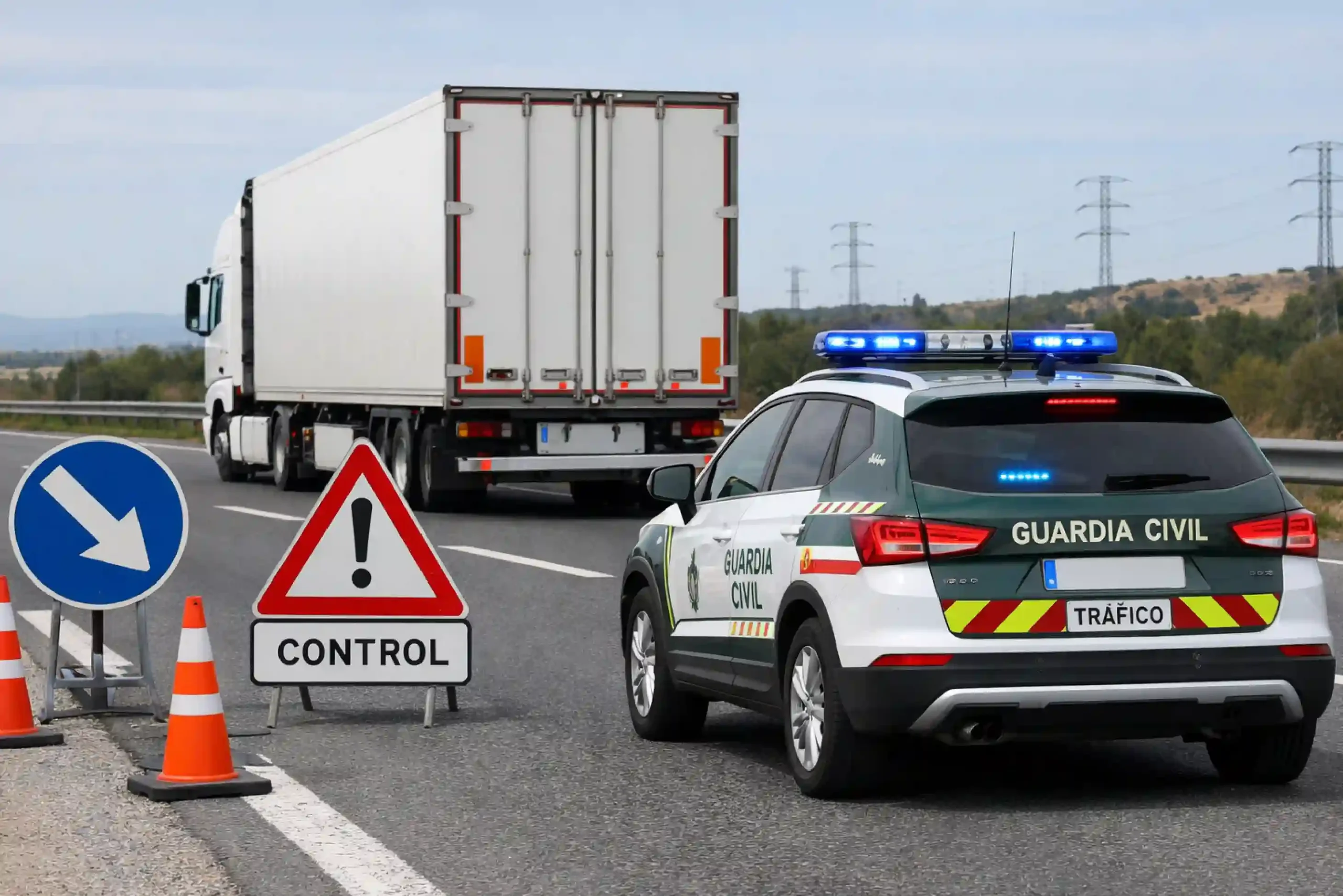
In-transit verification of the Digital Control Document for road transport; what should be taken into account?
The Digital Control Document for road transport represents a breakthrough in terms of efficiency, traceability and security. However, it also generates doubts and concerns, especially due to the fear of…
29 Jan 2026
Frequently asked questions (FAQs) on road transport documents
Numerous road transport documents are used in day-to-day road freight transport: control document, consignment note, CMR, delivery note, stowage form, waybill… All of road transport documents are relevant, but not…

23 Jan 2026
No-code electronic form: efficiency for companies with field operations
For companies operating in the field, achieving high levels of efficiency and competitiveness is an additional challenge, as digitizing processes becomes even more relevant. In this scenario, the electronic form…

22 Jan 2026
Comprehensive digitization of road transport documents: mandatory vs. strategy
The management of road transport documents is going through a key moment. The arrival of the mandatory digitization of the Control Document in October 2026 opens the door to the…